
Our offer is only for you if you are of legal age. Please confirm that you are at least 18 years old to proceed.


What Can I Smoke in a Hookah Instead of Tobacco?
 Updated September 12, 2025 5 min
Hand on heart: anyone who enjoys cosy evenings with a hookah knows that a hookah is not about classic smoking, where only the plain nicotine kick is the focus. It is about taste, hookah enjoyment, relaxation and the feeling of simply leaning back. The dense, aromatic smoke that slowly bubbles through the water, that is a real ritual for many. But what is actually behind this enjoyment? And does it always have to be hookah tobacco? The short answer: no, it does not. There are many exciting alternatives to tobacco (often also called tobacco substitutes) that manage entirely without nicotine and still deliver plenty of taste and smoke. In this article we take a closer look at how hookah tobacco actually works and which tobacco substitutes there are that you can smoke instead.
What to expect in this article
- What hookah tobacco is made of: raw tobacco and molasses
- How the indirect heating in the hookah works
- Which tobacco-free alternatives exist: from vape paste to hibiscus
- What happens if you only smoke molasses
- Why many people still stick with classic tobacco
- What to watch out for with use, storage and disposal
1. What is hookah tobacco actually made of?
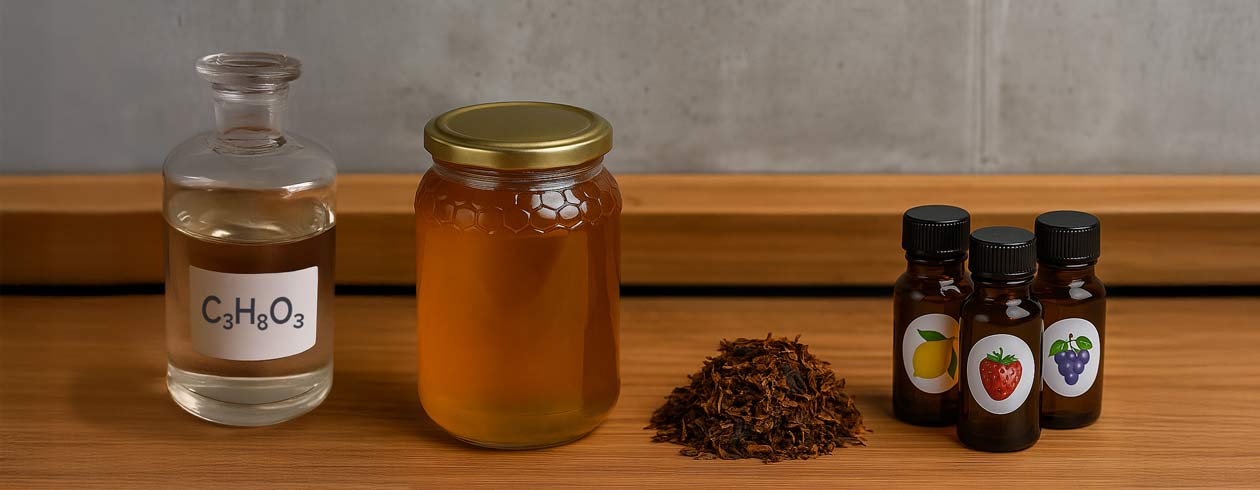
Hookah tobacco is not simply just „tobacco". In fact, it consists of several ingredients that are perfectly matched to each other and thus form the special content: raw tobacco is the base, usually washed, sometimes also unwashed. Then the molasses comes into play, that is a mixture that keeps the tobacco moist and can absorb aromas really nicely. It usually consists of:
- Glycerine, which provides the dense smoke and transports the flavour.
- Sweeteners, e.g. honey or invert sugar, so that the whole thing tastes nice and rounded.
- Aromas, and here the choice is huge: from fruity through tart to classic, exotic, creamy or with mint.
The hookah tobacco soaks up the molasses and thus becomes the perfect carrier material for vapour, smoking experience and taste experience. The big advantage: the enormous variety of aromas and the option to choose between many varieties depending on your preference.
2. How does smoking in a hookah work?
When smoking a hookah, something interesting happens: the tobacco is not burned directly (as with a cigarette), but heated indirectly, mostly through the charcoal on the hookah bowl or a multi-hole bowl. Through this heat, the moist components of the molasses evaporate, especially the glycerine, and the typical, aromatic smoke is created (more precisely: vapour). This is then drawn through the water in the hookah glasses, cooled and inhaled. What matters is: the carrier substance (the tobacco) plays a big role, it stores the molasses, heats up evenly and ensures that the smoke does not become too thin or scratchy. In addition, the tobacco releases nicotine during heating, which provides a nicotine kick. The nicotine content can be higher or lower depending on the type of tobacco, the treatment and the washing. Compared to cigarettes, there is therefore no direct combustion, but rather a gentle glowing. In most cases this results in a softer smoke flow, while the end effect of smoking still remains intense.
3. Are there alternatives? What you can smoke instead of tobacco
Yes, definitely! In recent years, a lot has really happened on the market. There are now several alternatives that completely do without tobacco (and often also without nicotine) but offer a very similar hookah experience. Here are a few exciting examples:
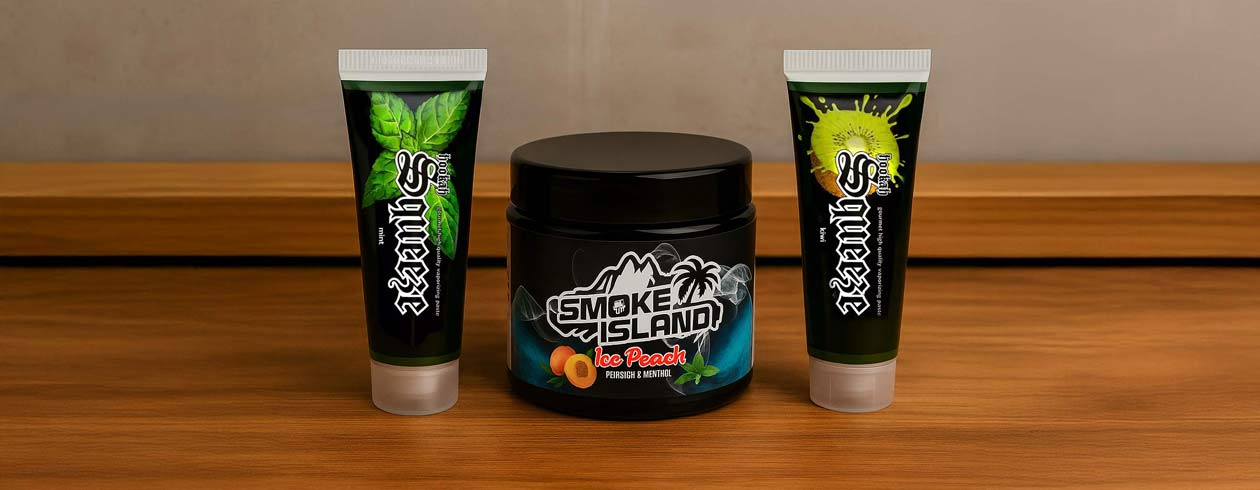
Hookahsqueeze (vape paste on a diatomaceous earth base)
This is a completely different way to smoke: Hookahsqueeze is a hookah paste, or a vape paste, that consists of diatomaceous earth (a kind of mineral rock flour). It is mixed with aromas and glycerine and spread into the bowl. When heated, it evaporates similarly to tobacco, but without leaves, fibres or nicotine.
Smoke Island (cellulose carrier)
Smoke Island relies on cellulose, a neutral plant-based material that absorbs liquids particularly well. Here too, the cellulose is treated with molasses and then works exactly like conventional tobacco, just without nicotine. Different flavours and varieties make the selection especially exciting.
Brusko (hibiscus flowers)
Instead of tobacco, Brusko uses dried hibiscus flowers as the carrier material. Sounds unusual at first, but it works great. The flowers are soaked with molasses, which creates a smoking behaviour similar to classic hookah tobacco. Brusko comes from Russia and is available in versions with or without nicotine, so you have the option.
Vape stones and other alternatives
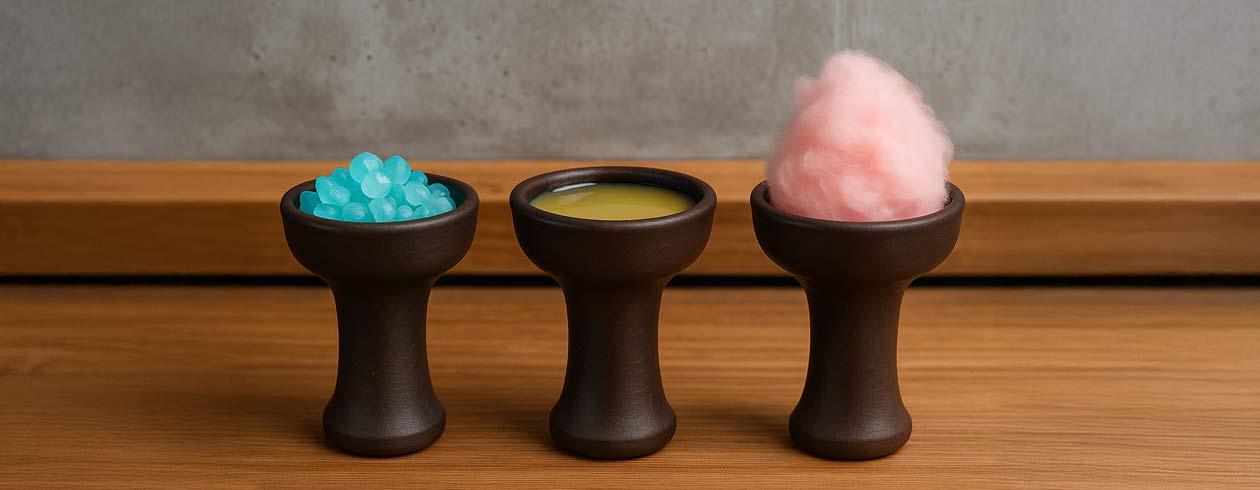
Hookah vape stones (steam stones) are small porous stones that are soaked with molasses. When heated, the liquid evaporates and produces dense vapour, entirely without tobacco or nicotine. There are also similar concepts with gel or jelly, that is in a more liquid form, similar to a liquid (e.g. the popular ByCandy liquid).
Caution: We advise against vape stones, as they are legally in a grey area. Here it applies: enjoy with caution.
You will find a selection of nicotine-free hookah tobacco with us in the shop.
4. What happens if you only smoke molasses?
Sounds logical at first: if the smoke comes from the molasses, can you not just put the molasses in the bowl on its own? In theory: yes. In practice: also, but not necessarily recommended. Without a carrier material that absorbs the molasses and is heated along with it, the pure molasses simmers in the bowl. As a result, the smoke is thinner, the consistency rather sticky, and the end of the effect is an unsatisfying smoking experience. In addition, it clogs up your bowl and makes disposal tedious, especially when the remains end up in household waste. Conclusion: molasses on its own works, but the combination with a carrier material is better, so that the whole thing works perfectly.
5. Why is tobacco still so popular?
Quite simply: nicotine. Many people smoke hookah not only because of the taste, but also because of the nicotine, the substance that provides the „kick". The nicotine is contained in the tobacco plant and provides this slightly invigorating feeling when smoking. Most tobacco substitutes are nicotine-free, which is a plus for many, but for regular tobacco smokers it is something missing. Those who do not want to do without nicotine therefore often continue to reach for classic hookah tobacco, or for alternatives with added nicotine.
Conclusion: Does it really have to be tobacco?
No, it does not! Whether hibiscus, paste, cellulose or vape stones: there are plenty of exciting alternatives that you can smoke instead of tobacco in your hookah. They work on the same principle, but often manage without nicotine, so they are ideal for everyone who likes to vape but does not necessarily want to become addicted. Presumably other absorbent carrier materials that are hard to ignite would also work if you soak them with molasses, such as plant-based herbal blends or mixtures with herbs. But whatever you put into your bowl, you decide: hookah tobacco without nicotine or with, classic or experimental, the main thing is that you enjoy the taste. And in the end, your personal favourite is what counts.
FAQ: what can I smoke in a hookah instead of tobacco?
Can I mix different tobacco substitutes with each other?
Yes, many smokers combine, for example, vape pastes with herbal blends to achieve a more intense aroma and stronger smoke development. But make sure the application in the bowl stays clean and the quality does not suffer.
How does the shelf life of tobacco substitutes affect the hookah experience?
Depending on the brand and consistency, the shelf life can vary. Plant-based products such as hibiscus or cellulose should be stored dry and airtight, while hookah paste or liquid often stays fresh longer.
Are there health risks with tobacco substitutes?
Even if no tobacco and often no nicotine is contained, that does not automatically mean that the consumption is completely harmless. The body reacts to inhaled vapours differently depending on the ingredients. Therefore it applies: usually less of a burden than tobacco, but not completely risk-free.
What role does the choice of hookah bowl play with tobacco substitutes?
For a good taste experience, the right use is important. While a multi-hole bowl can work well with herbal blends, vape pastes and vape stones often unfold their strengths better in bowls with suitable heat distribution.
How do I dispose of tobacco substitutes correctly after smoking?
Always follow the information of the respective manufacturer. Residues should be completely cooled down before you dispose of them. Depending on the product, the disposal notes can differ.
You might also be interested in
Knowledge