
Our offer is only for you if you are of legal age. Please confirm that you are at least 18 years old to proceed.


Making Your Own Hookah Tobacco – How Can I Make Hookah Tobacco Myself?
 Updated 07.05.2025 9 min read
In a nutshell
- Hookah tobacco is becoming more expensive – many people are therefore considering home production.
- Tobacco in neighbouring countries is usually no cheaper than in Germany.
- Alternatives include nicotine-free tobacco substitutes or so-called dry base pipe tobacco.
- Since 2022, the home production of hookah tobacco without authorisation has been illegal.
- A licence as a tax warehouse keeper is required for production – even for personal use.
- Anyone who produces it anyway must expect legal consequences (tax evasion).
- The production process is labour-intensive: tobacco must be washed, dried, de-stemmed and cut.
- Molasses consists of glycerin, flavourings and sweeteners – all components must be correctly measured.
- Storage, maturing time and hygiene are crucial for flavour and shelf life.
- Even though it is technically possible, we currently advise against home production due to the legal situation.
How Do I Make My Own Hookah Tobacco?
Hookah tobacco is getting more and more expensive. And measures such as the German 25g regulation are even accelerating this trend. It is therefore not uncommon for this topic to cause heated tempers and the odd bitter comment on our social media channels. Among these, there are always posts in which followers hint that cheap hookah tobacco can be obtained in other European countries and then "smuggled" across the border. Sure, you can do that, and as long as everything stays within the tax-free allowances, it does not even constitute tax evasion. But! And that is a big BUT. By now, most EU countries have raised their tobacco tax to such an extent that Good ol' Germany actually offers the cheapest tobacco products within the EU. To put it plainly: the claim that tobacco is cheaper in our neighbouring countries simply is not true.
Tip: For comparison: a tin of Blackburn Bapai Dinner costs €4.99 in our shop (as of March 2024), while the 25g tin costs a whopping 269.00 CZK in the Czech Republic, which is approximately €11. In France, for example, the price is nearly twice as high as ours.
Tip: If you are planning a holiday in countries such as France, the Czech Republic or Poland, it may actually be advisable to take your own German hookah tobacco with you. If you want to bring your own hookah on holiday, we recommend the AMOTION Roam. It is perfect for travelling, and the Travel Kit makes it easy to pack your hookah tobacco alongside your hookah, hose, bowl and mouthpiece.
What Are the Alternatives to Expensive Hookah Tobacco?
To get hold of cheap tobacco, you can of course go on holiday to countries outside the EU and bring a certain duty-free allowance home for personal use. However, going on holiday purely to save a few euros on tobacco is a rather peculiar idea. So if you neither have the money nor the inclination to fly abroad several times a year just to bring back enough cheap tobacco for personal use, you will more or less have no choice but to buy products that have been taxed in Germany. Alternatives to hookah tobacco on the German market include tobacco substitute products or the cheaper dry base pipe tobacco. We have also written blog articles on both topics. Here, for example, is the article on hookah tobacco alternatives:
Or, you could consider making your own hookah tobacco. This is not necessarily cheaper and also takes time and effort, but at least you will not be paying tobacco tax on the raw or decorative tobacco.
Tip: As the dry base or pipe tobacco varieties from hookah tobacco manufacturers have shown us, you can also simply use ordinary pipe tobacco to make hookah tobacco. This has already been cut and stripped of stems. For the sake of completeness, however, we will go one step further back and explain here how to process dried tobacco leaves to make your own tobacco.
Making Your Own Hookah Tobacco – Is It a Good Idea?
Until the change in legislation in 2022, it was still fairly straightforward to produce enjoyable hookah tobacco with manageable effort on your own, as some tobacco manufacturers were able to offer their flavours in the form of a ready-mixed molasses free of tobacco tax. By now, however, virtually every good molasses has disappeared from the market, as these must also be taxed. But the bad news does not end there. All ingredients intended for the production of hookah tobacco have been subject to taxation since the change in legislation. This includes flavourings, glycerine and propylene glycol. As a result, this business is no longer profitable for producers, and so the simplified production of your own tobacco using industrially manufactured, pre-mixed and flavoured components has become far more expensive than it was back in 2022. Looking at the bare facts, home production of hookah tobacco using simple means has never been less attractive than it is today. Whilst the taxes are quite an annoyance, what is even worse is this: the Generalzolldirektion (General Customs Directorate) makes it unmistakably clear that ANYONE wishing to produce hookah tobacco requires an "authorisation as a tax warehouse keeper". This applies even to consumers who only want to make hookah tobacco for their own personal use. As a result, any consumer wishing to produce hookah tobacco for personal use is effectively pushed into illegality by law.
Caution: Note: This also applies to the affordable two-component solutions from MixTwo, Fog Your Law or Nameless. Blending this tobacco without official authorisation can be regarded as a criminal offence. In addition, the tobacco produced in this way must be retrospectively taxed at the main customs office, as otherwise it constitutes tax evasion.
What Do I Need to Bear in Mind If I Want to Make My Own Hookah Tobacco?
Setting aside the fact that it is illegal to produce tobacco without official authorisation, making tobacco is no different from any other hobby. Depending on how much you want to do yourself, you should bear in mind that producing a product always involves costs. These include raw materials, containers, tools and equipment, but also cleaning agents, water, gloves and so on. These are all factors that would ultimately need to be added to the cost of the tobacco.
Tip: A large proportion of the ingredients used in hookah tobacco can also be purchased without tax, as they are used in food production, for example. However, it is illegal to use them for the production of hookah tobacco.
Let us assume for a moment that the 25 gramme tobacco law had not been passed and that small-scale production for personal use were not illegal. Even then, you should bear in mind that the first steps in a new field are always bumpy, and the initial results of your efforts will generally not inspire great enthusiasm. In all likelihood, quite the opposite will be true. Expect to have to throw away a certain percentage of your raw materials, because some of it may go mouldy, for example, or the flavours and their combinations simply do not appeal to your taste. If you are unsure whether your hookah tobacco has gone off, you can find out more in our blog article on the subject:
Developing a good product requires a great deal of experience. It takes time to optimise processes and perfect recipes. After all your test runs, however, you would probably end up with a hookah tobacco you could be proud of – even if its flavour would differ considerably from the high-performance flavourings you are used to from commercially produced products. Another point to consider in the hypothetical production of tobacco is the question of where to produce it. Do you have enough space to dry your tobacco after washing it? The smell should not be overlooked either, as particles and nicotine dissolve in the water during washing, and the resulting liquid smells dreadful. If you are not particularly sensitive to odours and had enough space, patience, enthusiasm and money to immerse yourself deeply in this "hobby", you might actually find making hookah tobacco quite enjoyable.
What Do I Need to Make My Own Hookah Tobacco?
Hookah tobacco essentially consists of stemmed and finely chopped raw tobacco, flavourings, sweetener and a humectant. Depending on the source, the ratio of tobacco to other ingredients varies between 35/65 and 20/80.
Equipment for Making Tobacco:
For processing tobacco at home, you can use a retired household appliance such as a blender or an old cheese grater. However, you should always use a separate device, as nicotine is a neurotoxin, and you would not want to accidentally end up with it in your food. Ingesting nicotine is not only unpleasant but also highly harmful to your health. If you want to wash tobacco, you will also need a kettle, a sieve, rubber/latex gloves, newspaper and possibly an oven with a baking tray.
Which Tobacco for Hookah Tobacco?
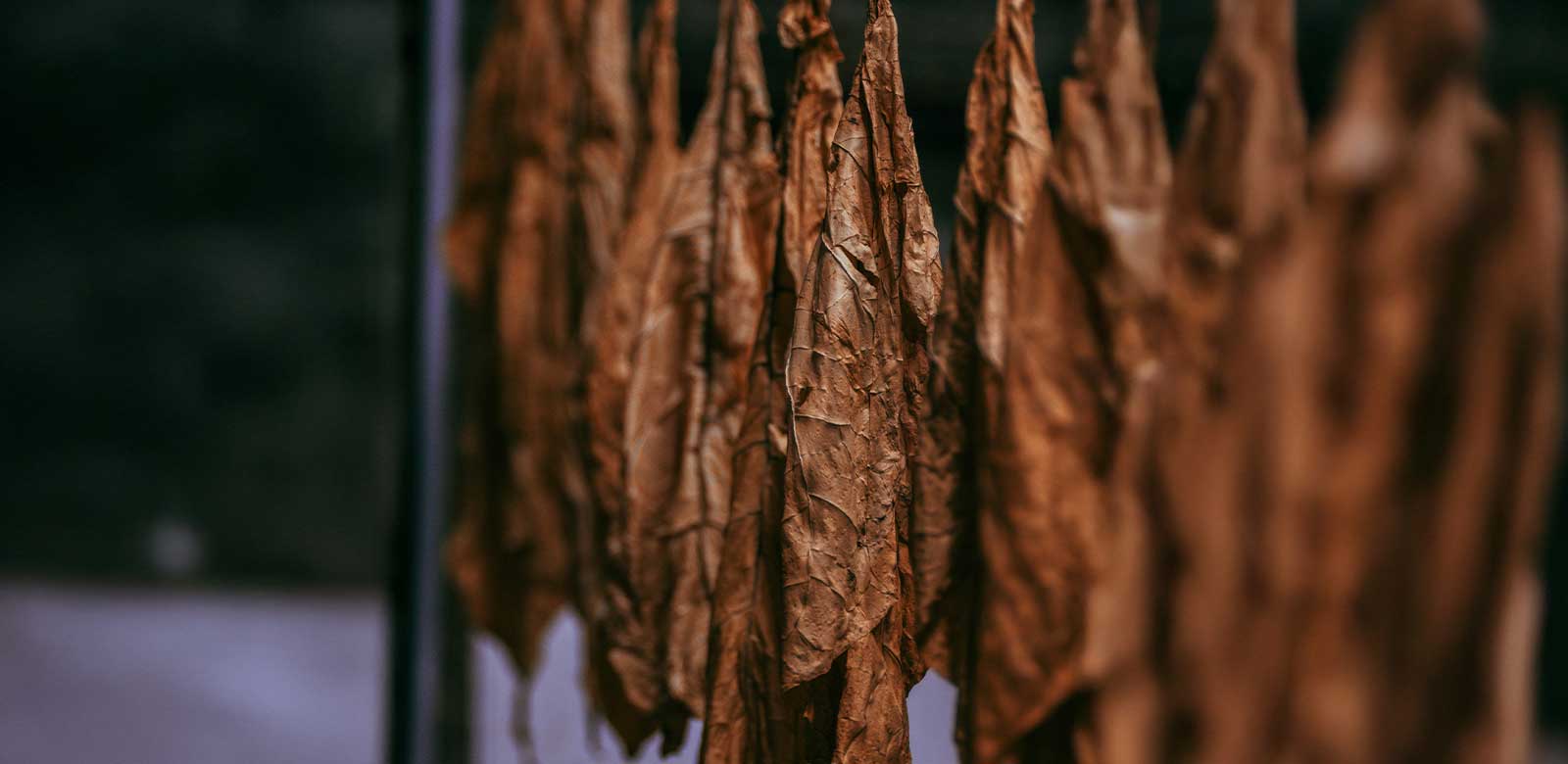
Which raw tobacco varieties you should choose for your hookah tobacco is a matter of taste. The only important thing is that it is raw tobacco. Whether you opt for a light Virginia tobacco or a robust Burley is entirely up to you. The way in which the raw tobacco is processed remains the same. There are various approaches to processing raw tobacco into ready-to-use tobacco. The best option is to buy naturally fermented raw tobacco directly, as this involves less work than completely untreated tobacco. Fermentation ensures that proteins in the leaf are broken down and the tobacco does not taste like burnt hair when you smoke it. In principle, you can also use the fermented raw tobacco directly – it does not need to be processed any further. However, you may wish to consider washing it and air-drying it before any further processing step, in order to reduce the nicotine content.
Tip: You wash the tobacco with boiling water, but be careful: the tobacco leaves should first be soaked in cold water and only then treated with boiling water.
After boiling, you can wring or squeeze the tobacco in a sieve. The washing water contains a lot of nicotine and smells terrible. So think carefully about what clothes you wear during this process and where you want to wash the tobacco. After washing, you could, for example, hang the tobacco on a washing line to dry and place several layers of kitchen paper underneath – to prevent the dripping liquid from staining your floor. You should process the tobacco within three days of washing.
Preparing tobacco – separating stems from leaves
Nobody wants branches and stalks in their tobacco, as these cannot absorb any molasses. Therefore, after drying, the stems are removed from the leaves. This can be done quite easily by hand. When the tobacco is dry, the leaf can be separated from the stalk very easily.
Shredding raw tobacco
Industrially, the tobacco goes through two cuts: first a coarse cut and then a fine cut. At home, this does not necessarily have to be done in the same way. A coffee grinder, a discarded blender, or an old cheese grater can do the job just as well in a single step. As a reminder: please do not use the same tools for preparing food and for processing tobacco. Once the tobacco is shredded, it is time to soak the dry tobacco flakes in molasses.
The molasses
Molasses is a mixture of various substances. The viscous liquid gives the tobacco its flavour and the necessary moisture. It also forms the main component of hookah tobacco, with a share of at least 66%. The three main components of industrially produced molasses are: 1. GlycerinGlycerin forms the largest proportion of an industrial molasses. It acts as a humectant and, due to its properties, is also very well suited to carrying flavours. For use in hookah tobacco, glycerin requires a purity of at least 95% – so make sure that the product is of pharmaceutical quality.
Tip: With small quantities of tobacco, one could, for example, forgo the humectant glycerin and use only molasses and flavourings. However, this also means that the tobacco has a shorter shelf life overall.
2. Flavourings: Products for flavouring tobacco can either be made yourself (these include self-dried herbs ground to a powder, fruit, citrus peel, and spices such as ground cinnamon or the seeds of a vanilla pod) or you can buy food flavourings (e.g. online). These food flavourings are also well suited for the production of hookah tobacco.
Caution: Note: Do not use e-hookah/vape liquids to sauce your tobacco, as these have a different composition. The concentrations for liquids are usually far too strong for hookah tobacco and can therefore be very unpleasant when smoking a bowl.
3. Sweeteners: honey (thin varieties such as acacia honey), glucose/dextrose, fructose, or sugar cane molasses (sweeteners)
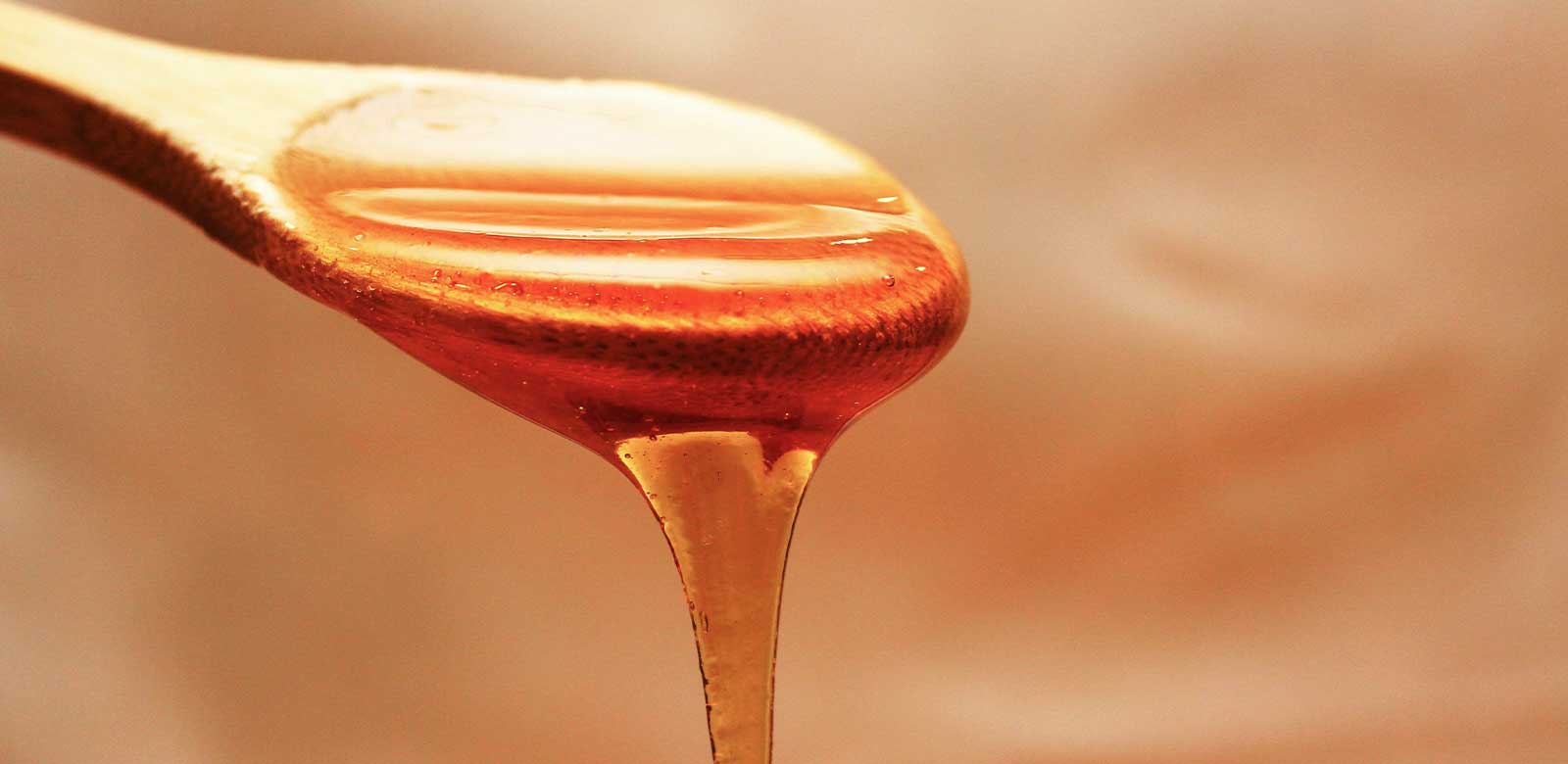
Tip: Excellent results can be achieved with organic molasses from a health food shop, and the tobacco takes on a beautiful dark colour.
If you want to develop a perfect molasses for yourself, we recommend starting with small quantities in various mixing ratios, numbering them and documenting the ingredients, so that you can eventually produce the mixture you like best in larger quantities. Depending on the source, there are different figures for the proportions. In most cases, it is roughly 1/3 tobacco to 2/3 molasses. However, it can also rise to a ratio of 1/5 tobacco to 4/5 molasses. It is best to gather your own experience with what you like most.
Give your tobacco time
An important factor in the production of tobacco is time. Almost invariably, a longer soaking time for the tobacco also means a more intense flavour. Some flavours only develop days to weeks after soaking, which is why quite a few articles and videos like to compare hookah tobacco to a good wine, which also needs to be given its time.
Tip: Burley should be given more time to steep than Virginia.
We advise you to give your tobacco at least two weeks before you smoke it. However, it can also take up to two months for the aroma of your tobacco to fully develop.
Tip: An excellent investment for private tobacco production is a vacuum sealer. Vacuum-packed, your tobacco is protected from mould, and despite the airtight seal you can still knead it thoroughly from time to time so that the moisture can be optimally absorbed into the plant fibres. You can also write all the important details on the packaging, such as the date, the mixing ratio, etc.
Conclusion: making your own hookah tobacco?
In principle, producing your own hookah tobacco is no great mystery, and if the thought of the effort and mess doesn't immediately put you off, it can certainly be an interesting hobby. With a little care in the processing, a bit of a tinkering spirit, money, and above all time, you can probably even create varieties that you have always wanted to try but have never come across anywhere. If the legal situation were not as it currently is, and you are not deterred by either the effort or the costs, making your own tobacco could well be a pleasant hobby. However, since things are as they are, we would currently advise everyone against potentially making themselves liable to prosecution.
200g hookah tobacco in the hookah shop
An alternative to doing everything completely yourself are the so-called "dry base" or pipe tobacco varieties, which you can use to blend your own hookah tobacco. You only need to add glycerin, as these are already stripped, pre-treated, and flavoured. In this case, all you need is a dry base tobacco / pipe tobacco / hookah tobacco for blending and you are good to go! We provide a slightly more detailed insight into the topic in the blog article:
In general, blending dry base tobacco is also not legal, which is why we must always include the following warning whenever the subject of making hookah tobacco yourself comes up:
Caution: Mixing with taxed glycerin would produce hookah tobacco. Production is only permitted with authorisation and in a tax warehouse, and must be taxed immediately.
We hope this article has been helpful and shed some light on the subject. If you like, feel free to check out our other blog articles. Until then, all the best and happy smoking!
FAQ: Making Your Own Hookah Tobacco
Is it legal to make your own hookah tobacco?
No, since 2022 the production of hookah tobacco without authorisation from the main customs office has been illegal – even for personal use. A licence as a tax warehouse keeper is required for this.
What do I need to make hookah tobacco?
You need raw tobacco, glycerin, flavourings, sweeteners, as well as equipment for washing, drying, cutting and soaking. Hygiene and precise dosing play an important role.
Which tobacco is suitable for making hookah tobacco?
Virginia and Burley are among the most common raw tobacco varieties. Ideally, they are already fermented. Which variety suits better depends on the desired flavour and nicotine content.
What is hookah tobacco molasses made of?
Molasses consists mainly of glycerin with at least 95% purity, flavourings such as food-grade flavourings, and a sweetener, for example honey or sugarcane molasses.
How long should home-made hookah tobacco mature?
Home-made hookah tobacco should rest for at least two weeks. For a more intense flavour experience, a maturing period of up to two months is recommended.
You might also like
Knowledge area