
Our offer is only for you if you are of legal age. Please confirm that you are at least 18 years old to proceed.


How Many Cigarettes Is a Vape?
 Updated 04.02.2026 3 min read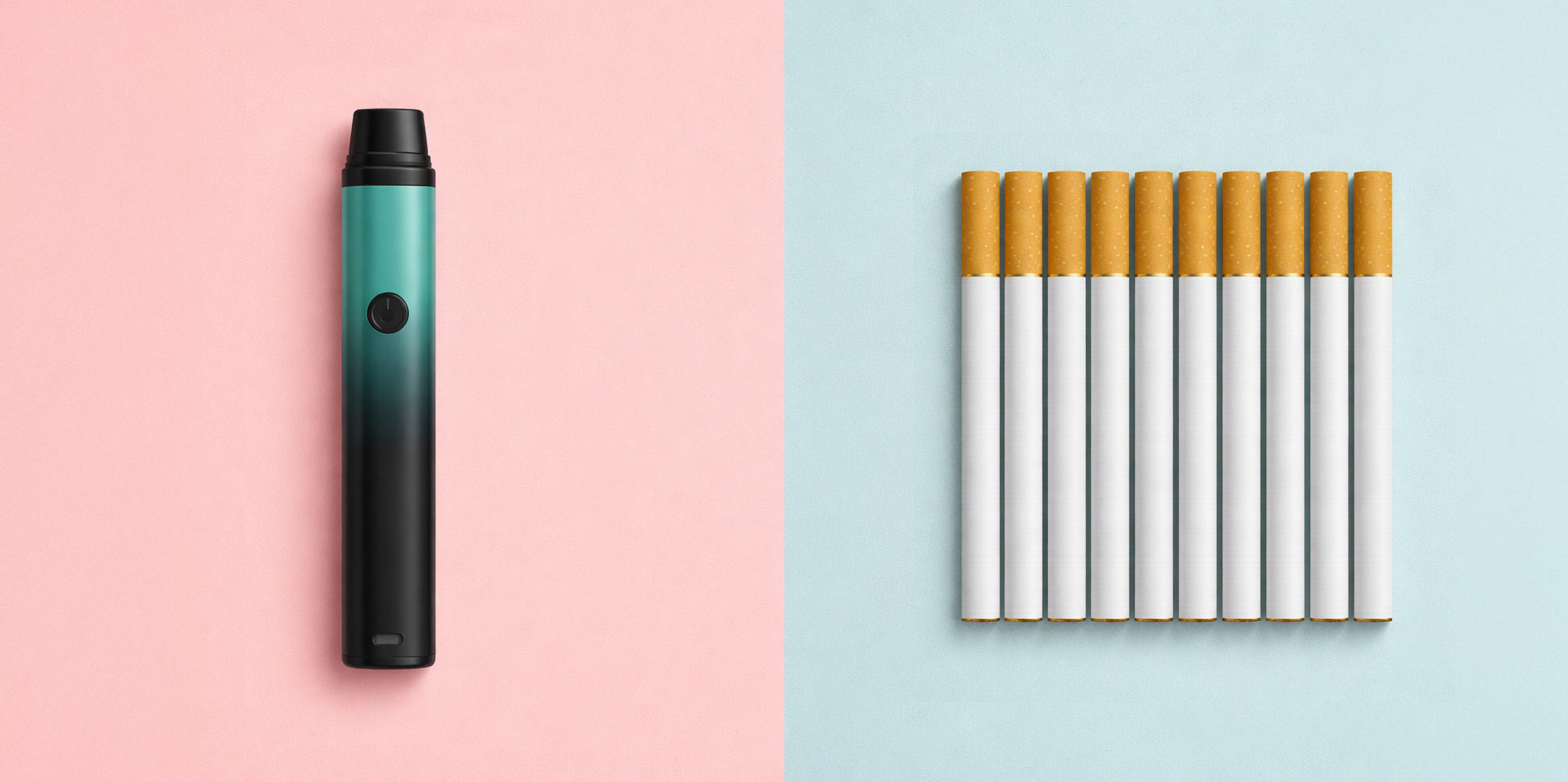
In a nutshell
- A 600-puff disposable vape is mathematically equivalent to approximately 40–50 cigarettes, although actual consumption varies greatly depending on drawing behaviour and realistically tends to be closer to 400–500 puffs.
- Despite a high nicotine content (up to 40 mg per 2 ml vape), nicotine is absorbed more slowly through mucous membranes when vaping than when smoking; nicotine salt acts particularly mildly, which can unnoticeably lead to overdosing or increased consumption.
- In terms of cost comparison, refillable pod systems offer a saving of over 200 euros per month compared to daily cigarette consumption.
- Since no combustion takes place when vaping, neither tar nor carbon monoxide is produced – however, long-term studies on inhaled additives such as organic acids in nicotine salt liquids are still lacking.
- Responsible use of vapes requires conscious breaks, realistic nicotine strengths, and regular reflection on one's own consumption behaviour in order to avoid continuous use and dependency.
You want to treat yourself to your first vape from our Moze online shop but have no idea what all the numbers and labels mean? 600 puffs, 20 mg nicotine, 2 ml liquid. Don't stress about it – we know that switching from classic tobacco to vapes often comes with a lot of question marks.
The answer to the cigarette equivalence question seems simple, but is technically and biologically more complex than what it says on the colourful packaging of disposable products. In this article, we show you why the right setup – such as a sustainable pod system – can save you a small fortune compared to smoking, and how to optimise your personal vaping experience.
The Rule of Thumb: Puffs vs. Cigarettes
To answer the question "How many cigarettes is 1 vape?" precisely, we first need to analyse the "opponent".
While cigarette packets display values for tar and nicotine, information about the duration of use is almost always missing entirely.
How Many Puffs Does a Cigarette Have?
On average, a smoker takes around 10 to 15 puffs on a cigarette before reaching the filter. On average, however, this varies greatly depending on the packing and individual smoking behaviour. For a realistic comparison, it is therefore best to simply calculate using a mean value of 12 puffs per cigarette.
The Calculation: From Disposable E-Cigarettes to Maxi Pods – All Models Compared
Most disposable e-cigarettes and e-cigarettes approved in Germany are limited to a maximum of 2 ml of liquid by the TPD2 regulation. Nevertheless, manufacturers advertise with different figures. Here is the result of our calculation:
| Vape Modell | Züge (Puffs) | Äquivalent Zigaretten | Äquivalent Schachteln (20er) |
|---|---|---|---|
| Klassik Vape | 300 Züge | ca. 25 Stück | ca. 1,2 Schachteln |
| Standard (z.B. Elfbar) | 600 Züge | ca. 50 Stück | ca. 2,5 Schachteln |
| Größere Vape | 700 Züge | ca. 58 Stück | ca. 3,0 Schachteln |
| Maxi Vape | 999 Züge | ca. 83 Stück | ca. 4,1 Schachteln |
The reality check: These figures are laboratory values. When directly comparing cigarettes vs. vapes, one thing stands out: those who take deep lung hits (direct lung) use up the device much more quickly. Realistically, many people end up getting around 400 to 500 satisfying puffs from a 600-puff vape.
Nevertheless: with a single vape, you hold the usage volume of an entire weekend in your hand. Please note that both disposable vapes and regular vapes should under no circumstances be disposed of in household waste after use, as they contain a battery.
Nicotine Content: Why 20 mg Is Not the Same as 20 mg
The number of puffs is one thing; the effective nicotine consumption is another.
- Cigarette: Contains approx. 10–14 mg of nicotine in the tobacco. However, the actual absorption is only around 1 mg to 2 mg.
- Vape (2 ml, 20 mg/ml): Such a product contains a total of 40 mg of nicotine.
In purely quantitative terms, the vape often contains even less nicotine than the number of cigarettes it theoretically replaces. However, the manner of absorption differs fundamentally.
The Secret of Bioavailability & Nicotine Salt
When smoking, nicotine reaches the brain very quickly through combustion. When vaping, absorption occurs primarily via the mucous membranes, which means the rise in nicotine levels is often perceived as gentler. The curve in the blood plasma rises more gradually but tends to last for a longer duration.
Particularly with modern pod systems using nicotine salt, this gentle perception can, however, influence consumption behaviour.
Important to Know About Nicotine Salt (Nic Salt)
Nicotine salt is perceived as particularly mild, as it irritates the throat less than classic freebase nicotine. This characteristic can lead to vaping more frequently or for longer periods without receiving a clear early warning signal from the body.
Particularly for new users, the rapid nicotine absorption can make it easier to inadvertently overdose. Possible signs include dizziness, nausea, palpitations, or cold sweats (nicotine flash). With regularly high consumption, nicotine tolerance also increases, which can significantly encourage the development of a dependency.
Note: Especially at the beginning, it is advisable to consciously take breaks and pay attention to physical reactions.
The Cost Check: Who Saves the Most?
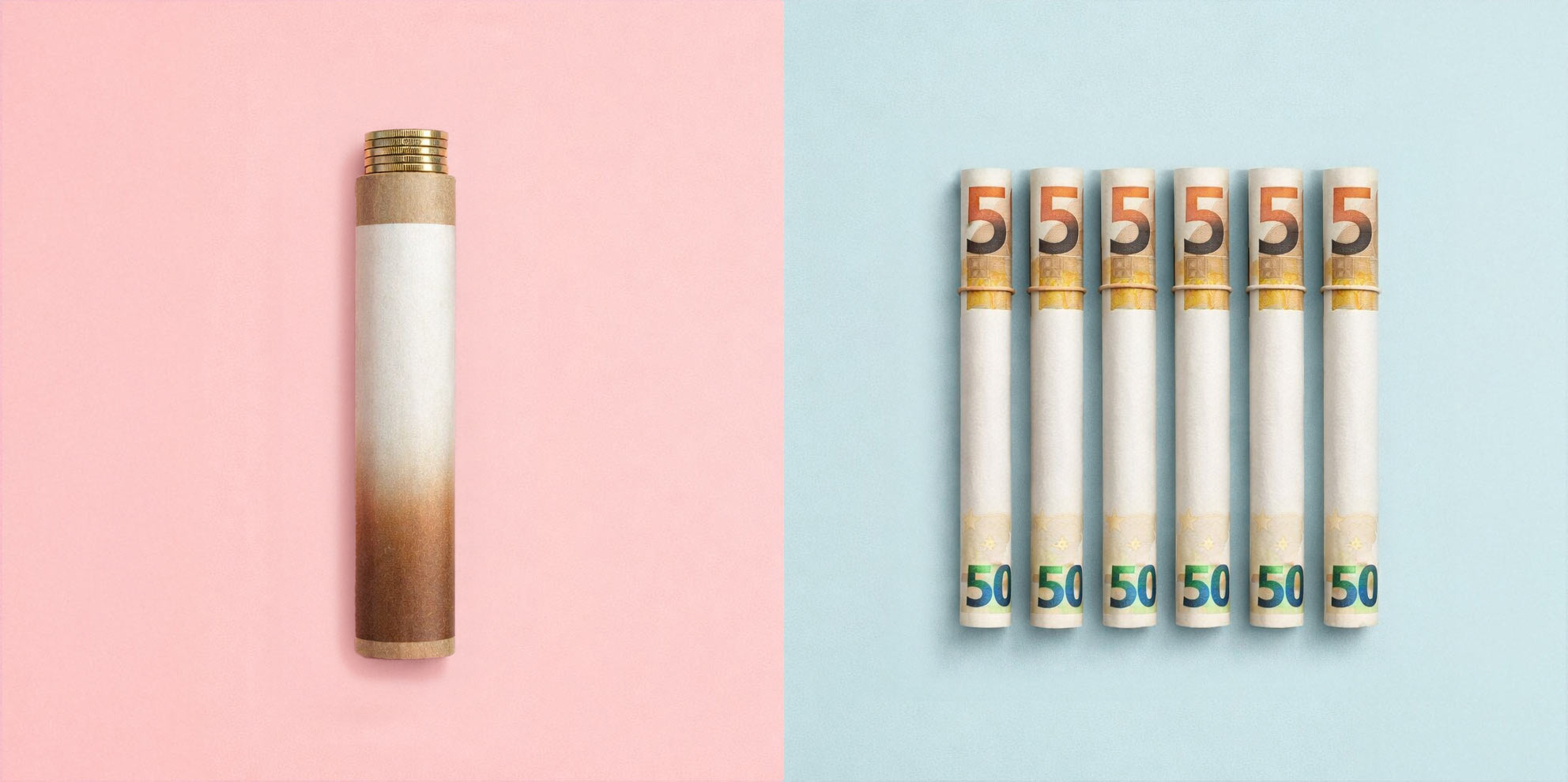
We compare the monthly costs (basis: 1 pack/day):
| System | Monatlicher Verbrauch | Kosten pro Monat |
|---|---|---|
| Tabak-Zigarette | 30 Schachteln | ca. 240 € |
| Einweg-Vape | 15 Stück (à 600 Puffs) | ca. 120 € - 150 € |
| Pod-System (z. B. Elfa Pod System) | 5 Flaschen Liquid + Pods | ca. 35 € |
Savings: With a refillable Pod System you can save over €200 per month!
You will also find a wide selection of flavours and aromas under Liquids on our website.
Health: What you do NOT inhale with e-liquids
No combustion takes place when vaping. This means that neither tar nor carbon monoxide is produced – two of the most harmful components of cigarette smoke.
This aspect is frequently cited as an advantage over traditional cigarettes. Nevertheless, it is important not to evaluate vaping solely from this perspective.
What should be viewed critically about e-cigarettes
Even though certain harmful substances are not produced when vaping, there are aspects that should be considered consciously and in a differentiated manner – particularly with regard to additives and consumption behaviour.
1. Additives & long-term research
In order for nicotine salt to remain stable and easily inhalable in a liquid, organic acids such as benzoic acid or levulinic acid are used. These substances are well known from other fields of application and are considered well-researched when taken orally.
However, comprehensive long-term studies on the prolonged inhalation of these substances do not yet exist. The effects that continuous inhalation over many years may have have not yet been conclusively clarified by science.
This does not automatically mean a health risk, but it does show that this is an area for which reliable long-term data is currently still lacking.
2. Recreational use instead of constant consumption
Vapes can represent an alternative to traditional cigarettes for adult smokers. However, the decisive factor is the responsible handling of the product.
Due to the gentle draw sensation and easy availability, vaping can develop in some users from clearly defined consumption phases into a constant background habit. This can increase nicotine consumption and encourage the development of dependency.
Responsible recreational use therefore means:
- taking conscious breaks
- choosing realistic nicotine strengths
- and regularly reflecting on one's own consumption behaviour
Frequently asked questions on the topic of how many cigarettes equal 1 vape
How many packs is a 600-puff vape equivalent to?
Mathematically, a 600-puff vape replaces approximately 2 to 2.5 packs of cigarettes. It is therefore an efficient and compact substitute, especially when on the go.
What nicotine strength do I need as a heavy smoker?
For heavy smokers, we recommend 20 mg/ml nicotine salt. This nicotine strength provides a comparable hit to traditional cigarettes. Lower strengths frequently increase the risk of relapse.
Are there vapes with a real tobacco flavour?
Yes. There are high-quality e-liquids on the market, for example from EXVAPE, that have been specifically developed as an alternative for tobacco fans and replicate classic tobacco flavour very well.
Is a vape without nicotine also equivalent to 2.5 packs of cigarettes?
In terms of usage duration alone, yes. However, a nicotine-free vape lacks the satiation effect. As a result, many users puff more frequently, which makes the device feel as though it empties more quickly.
Does a full tank in a pod system also equate to 2.5 packs?
Yes. Most standard pods hold 2 ml of liquid. At a nicotine strength of 20 mg/ml, one tank equates to approximately 50 cigarettes. A 10 ml bottle of liquid therefore replaces roughly 10 to 12 packs.
Is switching from cigarettes to vaping difficult?
No. Thanks to automatic draw activation, the handling is almost identical. The only thing that is new for switchers is the draw technique: instead of drawing short and hard, you should inhale longer and more gently. After around 3 to 7 days the body has usually adapted, and classic tobacco smoke quickly becomes unappealing.
Which vapes are available at Moze?
In our online shop you will find several pod systems such as the Elf Bar pod system (Elfa) in various versions as well as the PIXL. The vape range will be expanded further in the future.
Who can help me if I have problems with my vape?
If you have questions about usage or problems with your vape, our customer service team will be happy to help. You can reach our advisors from Monday to Friday. Monday to Thursday from 09:00 to 17:00 and on Fridays from 09:00 to 15:00. Contact: info@mozeshisha.de or by phone at +49 (0) 178 188 33 38.
Knowledge area