
Our offer is only for you if you are of legal age. Please confirm that you are at least 18 years old to proceed.


Vape Ban in Germany: The Current Situation
 Updated 8 October 2026 10 min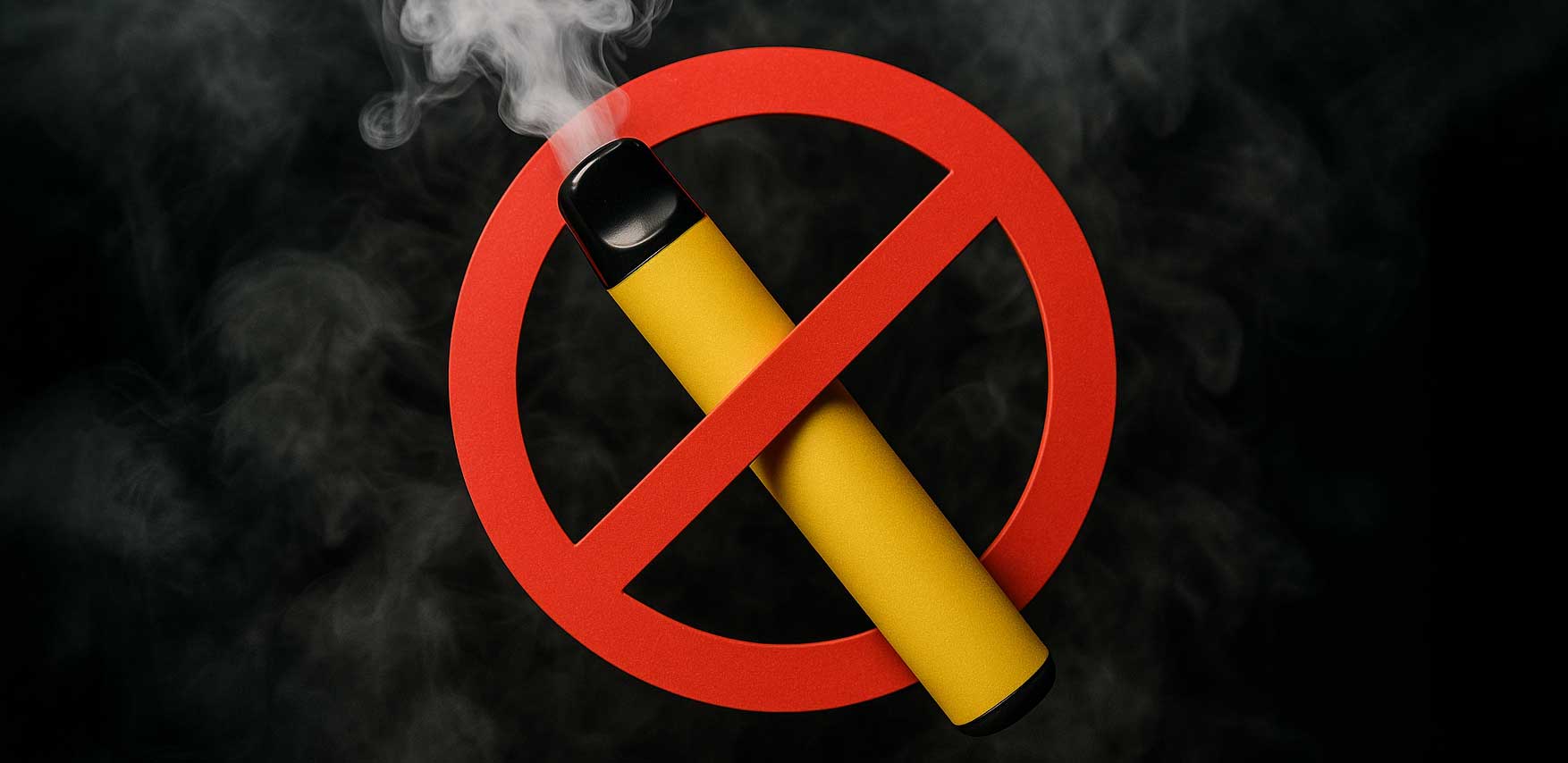
For years now the word has been that vapes are about to be banned in Germany. Then a date appears, it passes, and nothing happens. These reports cause uncertainty, among vapers as much as in the trade. So here is the sober answer first, before we go into the detail: as of October 2026, not a single vape is banned in Germany. Buying, owning and using them is legal, disposables included. The focus is purely on single-use products, not on vaping itself. What does exist is two fixed dates and a political plan, and we will take them one at a time.
The key points
- Nothing is banned. Neither disposable vapes nor any other e-cigarette has been taken off the German market.
- Since 1 July 2026 there is a take-back obligation: every point of sale has to accept used devices free of charge. That is not a sales ban.
- From 18 February 2027 the EU Battery Regulation applies. It requires replaceable batteries, and disposables with a sealed battery fail that test.
- A national disposable ban has been announced, but to this day no bill has been published.
- Pod systems and liquids stay legal, including every flavour and nicotine strength.
- The UK is further ahead and took disposables off the shelves back in June 2025.
Is anything actually banned in Germany yet?
No. That question has a short answer, and we are giving it, because plenty of the opposite is written online. There is no federal law prohibiting the sale of disposable e-cigarettes. Anyone buying one is doing nothing wrong, and neither is anyone selling one.
The confusion comes from two completely different rules being thrown together in the regulation debate. They differ in their aim and in how they are implemented. One concerns disposal, the other the design of the battery. Neither is a ban in the usual sense, and yet the second one means disposables in their current form will disappear from the market.
The three dates that actually matter
| Date | What applies | Legal basis |
|---|---|---|
| 1 July 2026 | Take-back obligation for retailers, no sales ban | ElektroG, amended since 1 January 2026 |
| 18 February 2027 | Device batteries must be replaceable, EU-wide | Regulation (EU) 2023/1542, Article 11 |
| open | National disposable ban, announced May 2026 | no bill published |
What really happens on 18 February 2027
You will read this date everywhere as "the EU disposable ban". That is a shortcut. We looked into the text of the regulation, and it says something different.
The basis is the EU Battery Regulation, Regulation (EU) 2023/1542. Article 11 requires that device batteries "can be readily removed and replaced by the end-user at any time during the lifetime of the product". Article 96 sets out when that applies, namely from 18 February 2027. E-cigarettes are not mentioned anywhere.
Why it is still the end of the disposable vape
A classic disposable vape has a permanently sealed lithium battery. It cannot be taken out, and that is exactly where it fails Article 11. From the cut-off date a device like that may no longer be placed on the EU market. So what is banned is not the vape, it is the throwaway battery.
The difference is not just legal hair-splitting. A device with a battery compartment that opens like the one on a remote control meets the requirement and would stay legal, even if it is otherwise a throwaway product. Whether manufacturers take that route is an open question.
Which e-cigarettes are affected and which are not
- Affected: disposables with a sealed battery, meaning the typical models with 600 puffs or more that you throw away complete after use.
- Not affected:open pod systems with a refillable tank, prefilled pod systems with a replaceable pod, and classic sets with a separate battery.
- Also not affected:liquids in every flavour and nicotine strength. Restrictions on flavours are being discussed politically, nothing has been decided.
What this means for our range. Nothing. We do not sell disposable vapes, only batteries, pods and liquids. All of it already meets the requirement of Article 11 today.
The take-back obligation: what applies since July 2026
The amendment to the German Electrical and Electronic Equipment Act came into force on 1 January 2026. The part you notice as a consumer applies since 1 July 2026: every point of sale that offers e-cigarettes or heated tobacco products has to take used devices back free of charge. That covers kiosks and petrol stations just as much as online shops, regardless of the size of the business.
Two things about it matter for you. First, the return is not tied to a new purchase, so you do not have to buy anything to hand something in. Second, you can hand your old device in where you did not buy it. Collection points get a standard national collection point logo so you can spot them.
The reason is less the waste than the danger. Lithium batteries in household waste or in the recycling bin regularly cause fires in refuse trucks and sorting plants. One damaged cell is enough. That is why vapes and empty pods belong in the collection box, not in the bin, and not loose among the packaging of other recyclables.
What is happening politically in Germany
On 8 May 2026, after a meeting with the environment ministers of the federal states, Federal Environment Minister Carsten Schneider announced that he would present a law for a nationwide disposable ban in the same year. There has been support for this from the Bundesrat for some time. Back in November 2024 the states voted by a majority to write a ban into the amendment of the Electrical Equipment Act. It did not make it into the version that came into force on 1 January 2026. The pressure from the states is therefore old news, it has simply not been acted on.
In politics the topic is settled, but nothing tangible has happened since. There is no bill, no date, no procedure in the Bundestag. For you that means: as long as the government presents nothing, 18 February 2027 remains the only binding date. If a national disposable ban does come, it would bring that date forward rather than replace it.
For the trade this is above all an uncomfortable position. Nobody currently knows what the next step will be.
Is a national ban even needed any more?
A fair question, given that the EU is taking disposables in their current form off the market anyway. Three reasons still speak for it.
The gap in the design rules. Article 11 does not ban disposable vapes, it bans permanently fitted batteries. A manufacturer who builds a throwaway device with a battery compartment that flips open, much like a remote control, meets the requirement and may carry on selling. Whether such a construction counts as sufficiently easy to open has not been decided. A national ban would target the product rather than the battery and close that gap.
The timing. The EU rule applies from 18 February 2027. A German law could take effect earlier. For a product of which millions of units end up in the bin every year, a few months are an argument.
The legal basis. The Battery Regulation is environmental law. It says nothing about nicotine content, flavours or youth protection. A national ban could rest on those grounds too and regulate points that battery law does not touch at all.
Against that stands a sober argument: without a sealed battery, the throwaway model barely adds up for manufacturers. It is quite possible the question answers itself before any law is finished.
The UK shows what it looks like
If you want to know what a real ban means, look at the United Kingdom. Selling disposable vapes there has been prohibited since 1 June 2025, online and in shops, with and without nicotine. The British rule goes further than the EU Battery Regulation: a device only counts as reusable there if it has a rechargeable battery, a refillable tank and a replaceable coil. All three parts have to be available to buy separately.
Retailers who ignore it pay 200 pounds in England to start with. Repeat offences can mean unlimited fines and up to two years in prison.
Why a disposable ban is being discussed at all
The gateway for young people
The Federal Institute for Public Health surveys a representative sample for its drug affinity study, most recently more than 7,000 adolescents and young adults in 2025. Among 12 to 17 year olds, in the 30 days before the survey 7.9 percent had smoked a tobacco cigarette, 7.3 percent had used a reusable e-cigarette and 5.5 percent a disposable one.
The direction of travel is the real issue. The share of 12 to 17 year olds who smoke was 6.1 percent in 2021 and 9.6 percent in 2025. Among 18 to 25 year olds it fell from 29.8 to 26.3 percent over the same period. Young people are smoking more again, young adults less. That colourful packaging, sweet flavours and a price under ten euros make it easier for young people to start is the main argument of those in favour of a ban. The World Health Organization puts it this way: starting in adolescence increases the likelihood of lasting dependence and of a later switch to other tobacco products. Start early and you slide into nicotine addiction more easily, and you tend to stay. Then there is the nicotine content: disposables are sold almost throughout at the legal maximum of 20 mg per millilitre, and a weaker version often does not exist at all.
What often gets lost: among 12 to 17 year olds the most widespread vaping product is not the disposable but the reusable e-cigarette, at 7.3 against 5.5 percent. Its use has risen markedly across all groups according to the study, among adolescents particularly between 2023 and 2025, and one in five of the young people who use it now vapes daily. A ban that only covers disposables therefore leaves the larger share untouched.
Regardless of any ban debate: handing over nicotine-containing and nicotine-free e-cigarettes to under 18s is prohibited under the German Youth Protection Act, in shops and by mail order alike. Vaping is not a harmless hobby, the vapour contains substances that do damage over time. What we have collected on this is in our Hookah and Health section.
Environment and fire risk
A disposable vape is an electrical device with a lithium battery that ends up in the bin after a few days. The battery is often still well charged when it is thrown away. That is exactly what makes it dangerous if it gets damaged in a press. On top of that come plastic, metal and electronics in a design that can hardly be separated. That is where the EU stepped in, and it did so through battery law rather than tobacco law.
What e-cigarettes and liquids cost
Regardless of the ban debate, vaping is getting more expensive, through tax. For substitutes for tobacco products, meaning liquids, a rate of 0.32 euros per millilitre has applied since 1 January 2026. In 2025 it was 0.26 euros, in 2024 0.20 euros.
Work it through. A 10 ml bottle of liquid therefore carries 3.20 euros in tax. A disposable vape with 2 ml carries 0.64 euros. Per millilitre you pay the same tax either way, it is just that with a refill system it spreads across far more vapour per device bought.
With our current prices the comparison looks like this: a battery for a prefilled system costs 7.99 euros once, a two-pack of pods 7.99 euros. With an open pod system you pay 24.99 euros for the battery and then 8.90 euros for 10 ml of liquid. You buy the device once, after that you only pay for what goes in it. How quickly that pays off depends on how much you vape, so we will spare you a rule of thumb that would not fit your case anyway.
Switching from disposable vapes to pod systems
The most common objection to switching is not the price but the worry that a refill system feels different. So here are the two questions that reach our customer service most often.
Does a pod system draw like a disposable vape?
Yes, if you pick the right device. Almost all disposables have a tight draw, similar to a cigarette. Pod systems with a tight draw offer exactly that behaviour, and the difference in the vaping feel is small. If you prefer it more open, open pod systems offer models with a looser draw, where the resistance of the coil controls how much vapour arrives.
The second point is the liquid. Disposables work with nicotine salt rather than free nicotine. At the same strength nicotine salt is less harsh on the throat and is absorbed faster, which is why it feels more familiar to people switching over. Our liquids come in 10 and 20 mg per millilitre, so you can carry on at the same strength you know from the disposable, or deliberately go lower.
What does switching really cost?
Break it down per millilitre and it becomes clear. A disposable vape holds 2 ml and usually costs between 7 and 9 euros in the shops, which works out at around 4 euros per millilitre, and you pay it every time because the device is part of the price.
- Prefilled pod system: battery 7.99 euros once, then a two-pack of pods holding 4 ml together for 7.99 euros. That is 2 euros per millilitre.
- Open pod system: battery 24.99 euros once, then 10 ml of liquid for 8.90 euros. That is 0.89 euros per millilitre.
With the prefilled system you are cheaper off from the very first pod. With the open pod system you carry the higher device price first, but you make it back after roughly 9 ml of liquid, so within a few weeks depending on how much you vape. After that you pay about a quarter of what the same amount would cost you as disposables.
Disposable vapes and pod systems compared
The difference is less the vaping itself than what happens afterwards. Here are the hard points side by side:
| Disposable vape | Pod system | |
|---|---|---|
| Battery | sealed in, single use | rechargeable, stays in the device |
| After 18/02/2027 | may no longer be placed on the market | unchanged, still legal |
| Capacity | 2 ml, fixed | swap the pod or refill 10 ml |
| Flavours | one flavour per device | freely combinable, nicotine level your choice |
| What goes in the bin | the whole device including electronics | only the empty pod |
| Cost | the full device price every time | device once, then only what goes in it |
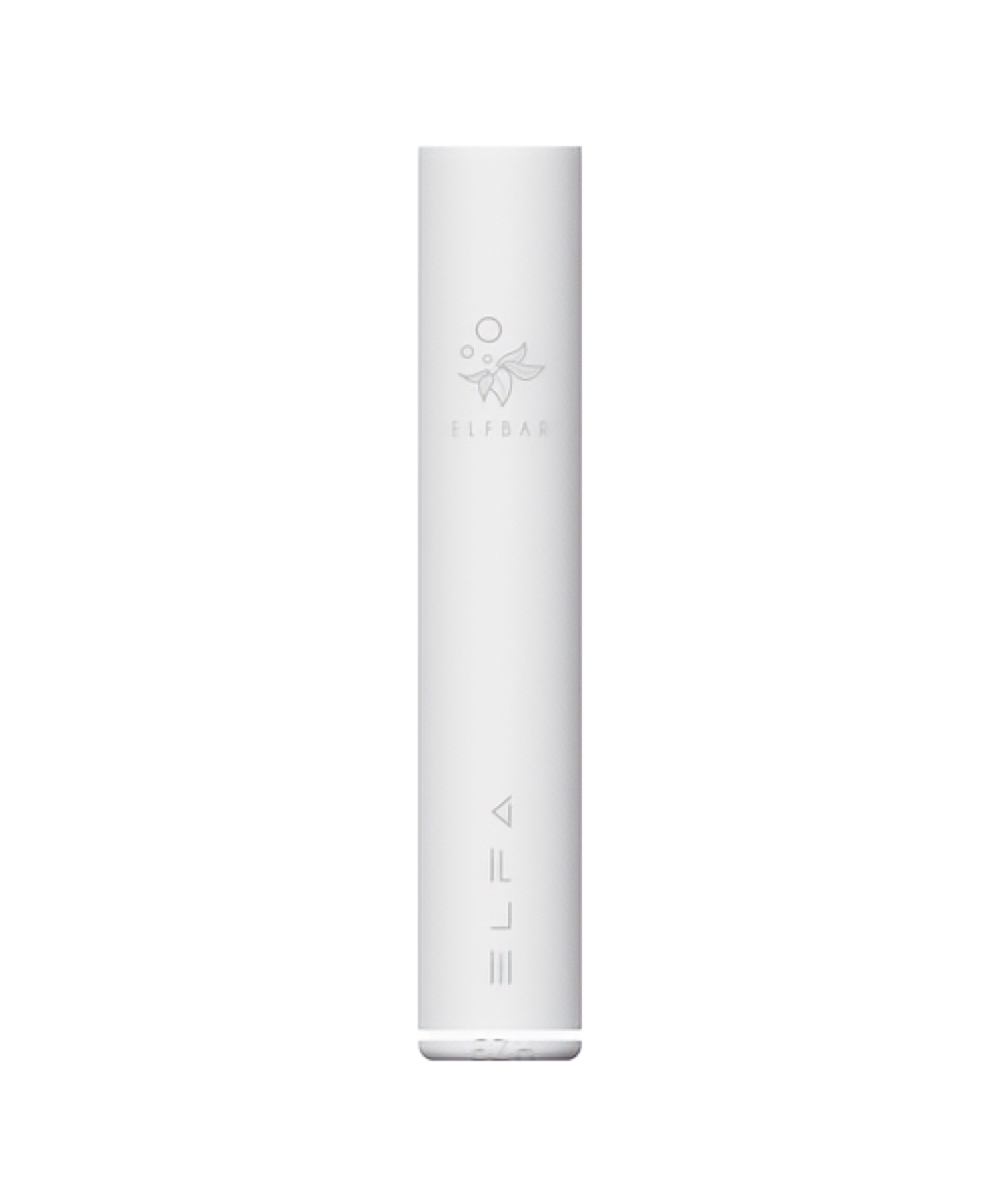 Elf Bar Elfa Battery Device View product
 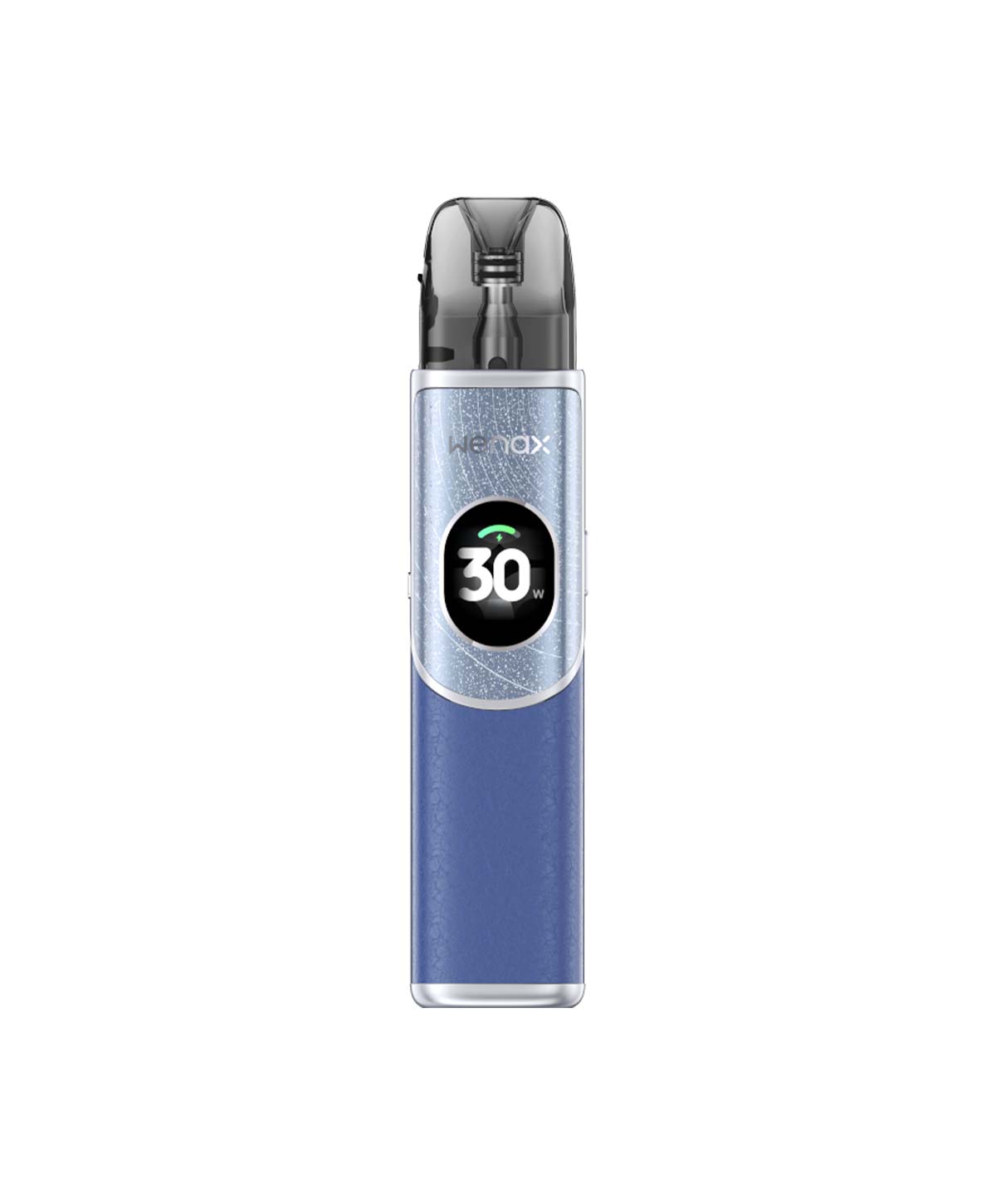 Geekvape Wenax Q2 Battery Device View product
 Pod systems and what else stays legal
Here is the reassurance for every vaper, because it gets lost in the debate. None of the following products is banned or is going to be banned:
- Open pod systems with a refillable tank and replacement pods to swap in
- Prefilled pod systems with prefilled pods
- Liquids in every flavour, with and without nicotine
For nicotine-containing liquids the familiar rules from tobacco law still apply: no more than 20 mg of nicotine per millilitre, no more than 10 ml per refill container and no more than 2 ml in the tank of a ready-filled device. On top of that come the advertising restrictions, which are about as strict for e-cigarettes as they are for tobacco: no outdoor advertising, no cinema advertising before 6 pm, no sponsorship. The aim behind all of these requirements is the same, namely to reduce health risks through the ingredients and through availability.
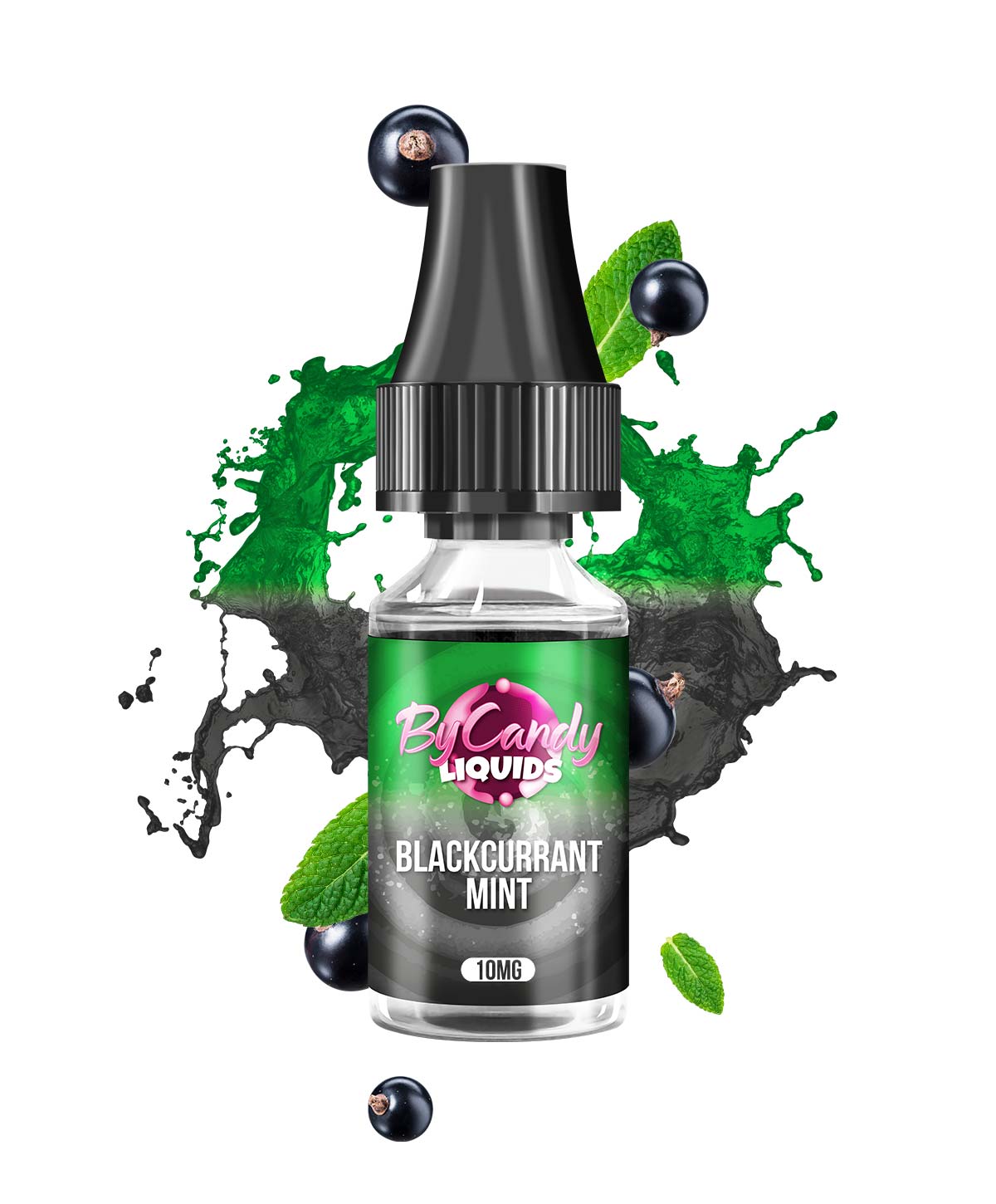 ByCandy Liquid 10 ml View product
 Conclusion
If you want to know where you stand today: nothing is banned in Germany. Since July 2026 you have to be able to hand your old device in free of charge, and from February 2027 disposables with a sealed battery will disappear from European retail because the battery has to be replaceable. A national disposable ban is on the table, but no more than that. It would mainly be needed to catch throwaway devices with a removable battery compartment as well.
There is no shortage of alternatives. Little changes for you if you already use a refill system. If you still rely on disposables, you have until February 2027 to get used to something else, and you save money along the way. More about the devices themselves is in our Vape Guide.
FAQ: Common questions about the vape ban
Are disposable vapes already banned in Germany?
No. Two things are constantly mixed up around the topic, so here is the clear answer: as of October 2026 there is no law prohibiting the sale of disposable e-cigarettes in Germany. Buying, owning and using them is legal. Since 1 July 2026 there is only a take-back obligation for retailers, and that is not a sales ban.
From when may disposable vapes no longer be sold?
Anyone searching for a date on this topic will find plenty of outdated information. Only one thing is solid so far: EU-wide from 18 February 2027, provided the battery is built in and cannot be replaced by the user. That follows from the EU Battery Regulation (EU) 2023/1542. An earlier German ban has been announced, but to this day no bill has been published.
Is 18 February 2027 really a vape ban?
Strictly speaking no, even though the date is sold everywhere as a vape ban across Germany and the EU. Article 11 of the EU Battery Regulation requires that device batteries can be readily removed and replaced by the user. E-cigarettes are not mentioned. Disposables only fall foul of it because their battery is sealed in. A device with a battery compartment that opens would stay legal.
What has changed for retailers since July 2026?
Every point of sale that offers e-cigarettes or heated tobacco products has to take used devices back free of charge, regardless of the size of the business. That is set out in the amended Electrical and Electronic Equipment Act and applies to kiosks, petrol stations and online shops alike. Collection points carry a standard national collection point logo.
Do I have to buy something new when I hand in an old device?
No. The return must not be tied to a new purchase. You can also hand your device in somewhere you did not buy it.
How do I dispose of an old vape properly?
Through a collection point or a recycling centre, never through household waste and not with the packaging in the recycling bin. The lithium battery inside is usually still charged when it is thrown away and can catch fire when it is compressed. That risk was one of the reasons for the new rules.
Are pod systems affected by the ban?
No. Open pod systems and prefilled pod systems already meet the requirement of the Battery Regulation, because the battery and the pod can be separated. They stay legal beyond 18 February 2027.
Are liquid flavours going to be banned?
Nothing has been decided. Restrictions on sweet flavours are being discussed at EU level, among other things in connection with the next tobacco products directive. Until then liquids are regularly on sale in every flavour.
How much nicotine may a liquid contain?
No more than 20 mg per millilitre. A refill container may hold a maximum of 10 ml, the tank of a ready-filled device a maximum of 2 ml. These limits are unchanged and have nothing to do with the ban debate.
How much tax is in a liquid?
Since 1 January 2026 it is 0.32 euros per millilitre, up from 0.26 euros. A 10 ml bottle therefore carries 3.20 euros in tax, a 2 ml disposable 0.64 euros. That is the main reason why the price has risen noticeably in recent years.
What applies in the UK?
Disposable vapes have been banned there since 1 June 2025, online and in shops, with and without nicotine. A device only counts as reusable if it has a rechargeable battery, a refillable tank and a replaceable coil. The UK is therefore considerably further ahead than Germany.
From what age can you buy vapes?
From 18. The German Youth Protection Act prohibits handing over nicotine-containing and nicotine-free e-cigarettes to minors, in shops and by mail order. That is why we check age in the shop.
What do I do with my stock of disposable vapes?
Use them up. Owning and using them is not affected by any of the rules described, not even after 18 February 2027. What is affected is placing them on the market, meaning the sale. Empty devices then go to a collection point. And if you know someone who still relies on disposables: sharing this helps, plenty of people still do not know they can hand their old device in anywhere free of charge.
You might also be interested in
Knowledge