
Our offer is only for you if you are of legal age. Please confirm that you are at least 18 years old to proceed.


How Does a Hookah Work?
 Updated 29 April 2025 4 min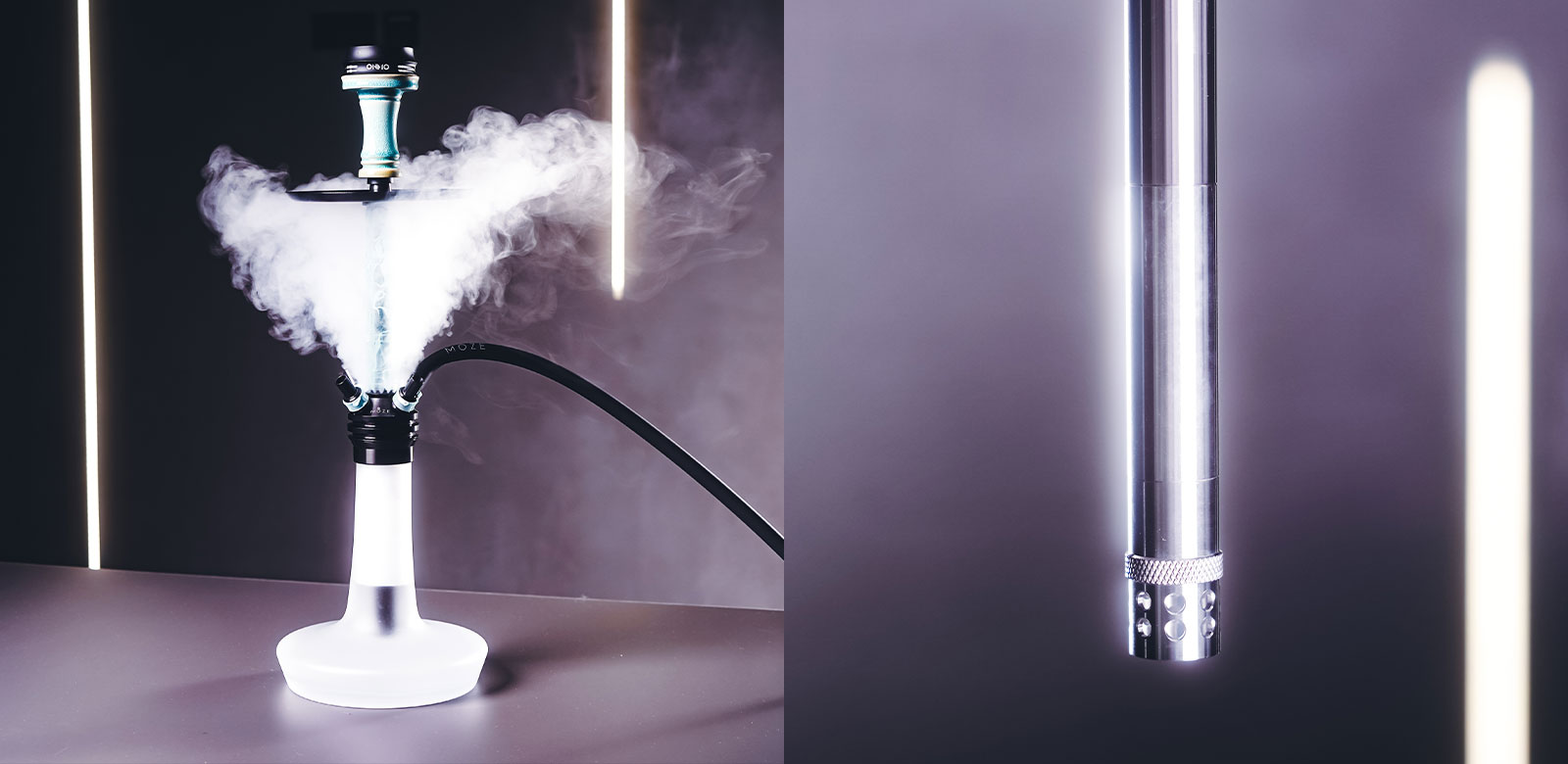
In a nutshell
- Drawing on the mouthpiece creates negative pressure inside the glass base.
- This pulls fresh air through the charcoal, tobacco bowl and tobacco.
- The heat releases flavor and components of the molasses, producing smoke.
- The smoke travels through the stem and downstem into the water, where it cools before reaching you through the hose.
- A blow-off reverses the pressure: blowing into the hose lifts small valve balls and pushes smoke out of the glass base.
The basic principle of a hookah
A hookah works through airflow, heat and negative pressure. When you draw on the mouthpiece, you remove air from the glass base. Because the system is mostly airtight, fresh air has to enter from outside. It travels through the tobacco bowl, past the charcoal and through the tobacco.
The charcoal provides the heat. An HMD or aluminum foil distributes that heat above the tobacco bowl. With proper heat management, the tobacco should not burn with an open flame. Instead, it is heated and slowly dries out. This releases flavor and components of the molasses, and the resulting smoke follows the airflow through the hookah.
Which parts make up a hookah?
Every component has to work together to create an airtight path for the air. The diagram shows the typical construction of a modern hookah.
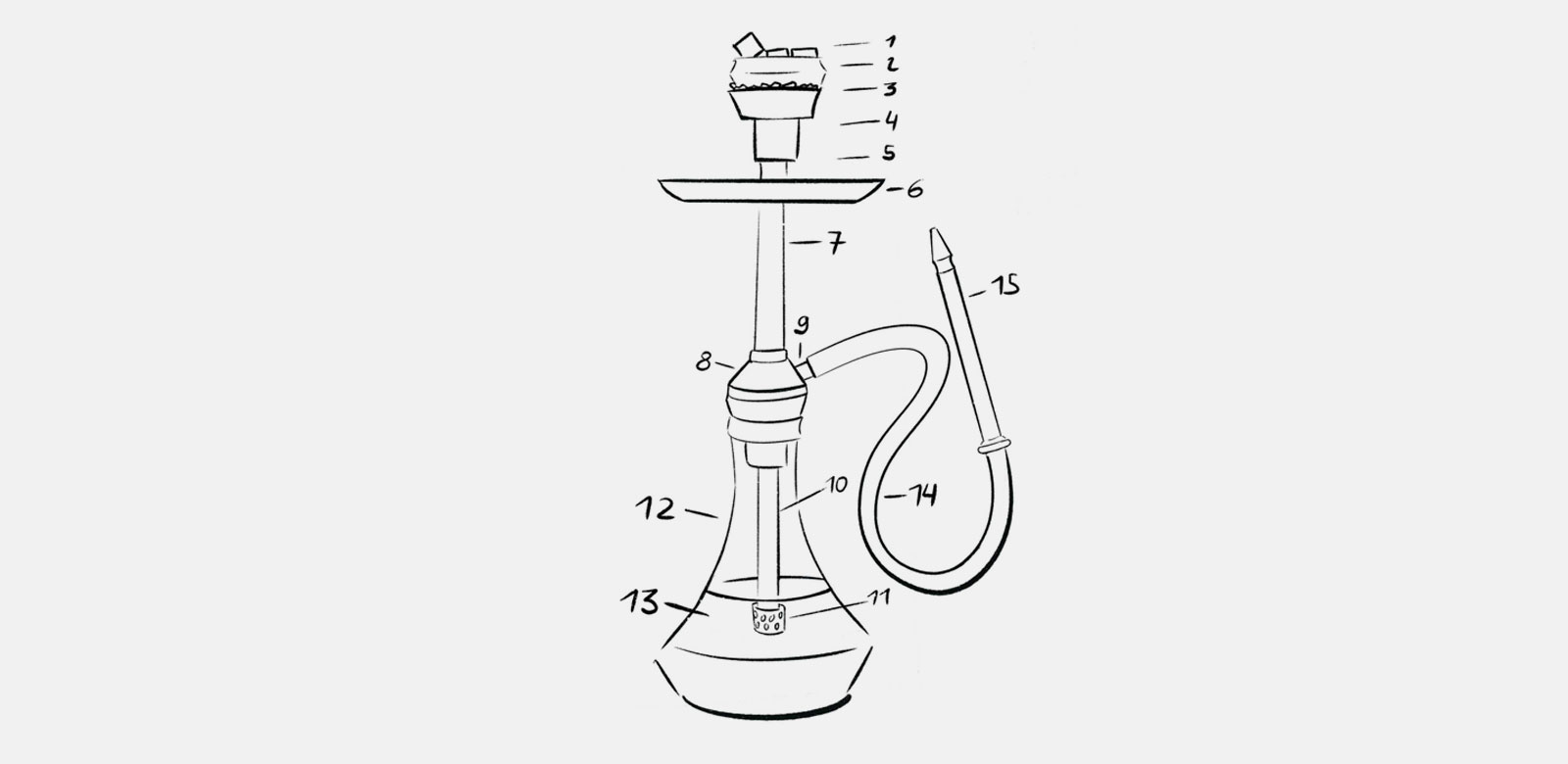
| Component | Purpose |
|---|---|
| 1. Charcoal | Provides the heat for the tobacco. |
| 2. HMD or aluminum foil | Transfers and regulates heat above the tobacco bowl. |
| 3. Tobacco | Contains molasses and flavorings that are released through heat. |
| 4. Tobacco bowl | Holds the tobacco and directs the smoke toward the bowl adapter. |
| 5. Bowl adapter | Connects the tobacco bowl to the stem. |
| 6. Charcoal tray | Catches ash and serves as a temporary resting place. |
| 7. Stem | Guides the smoke down toward the hub. |
| 8. Hub | Connects the stem, downstem, hose and purge valves. |
| 9. Hose port | Creates an airtight connection to the hose. |
| 10. Downstem | Directs the smoke below the surface of the water. |
| 11. Diffuser, optional | Splits the airflow into smaller bubbles and reduces the bubbling noise. |
| 12. Glass base | Holds the water and the smoke above it. |
| 13. Water | Cools the smoke as it passes through. |
| 14. Hose | Carries the smoke to the mouthpiece. |
| 15. Mouthpiece | This is where you draw in the air and smoke. |
How smoke travels through a hookah
Assume the hookah is ready for a session: The glass base contains water, the tobacco bowl is packed and glowing charcoal sits in the HMD. The following happens as soon as you draw:
- Negative pressure forms: You draw air out of the glass base through the hose and mouthpiece.
- Fresh air enters: Outside air is pulled through the tobacco bowl to replace the missing air.
- The tobacco heats up: Air passes the charcoal. The extra oxygen keeps it active while the HMD transfers the heat to the tobacco.
- Smoke forms: Heat releases flavor and components of the molasses, which are carried along by the airflow.
- The smoke reaches the water: It passes through the bowl adapter, stem and downstem until it is below the waterline.
- The smoke rises: The airflow creates the familiar bubbles and bubbling sound as it moves through the water.
- The smoke reaches the mouthpiece: It leaves the open space above the water through the hose port and travels through the hose to you.
Why does a hookah bubble?
The bubbling sound is created when smoke is pulled through the submerged end of the downstem. Air bubbles form, rise to the surface and burst. Larger bubbles usually make the hookah sound louder.
A diffuser at the end of the downstem divides the airflow between many small openings. This creates smaller bubbles and makes the hookah noticeably quieter, which is useful if the noise bothers you or you want to watch a movie during the session.
How does a hookah blow-off work?
For a blow-off, you gently blow into the hose instead of drawing from it. This creates positive pressure inside the glass base. Small balls in the purge valves lift up, allowing smoke to leave through the designated outlets.
During a normal draw, those balls do the opposite. They seal the outlets so that no unwanted air enters the hookah. The position and direction of the escaping smoke depend on the design. Some hookahs have a fixed blow-off, while others offer a variable system.

Tip: Blow gently into the hose. If you blow too hard or a valve is blocked, water can rise inside the downstem and reach the tobacco bowl.
Do all hookahs work in the same way?
The basic principle is the same for almost every classic hookah. Differences include the diameter of the airways, the downstem and diffuser, the number of hose ports and the blow-off design. These details change the draw resistance, noise and purge behavior from one model to another.
If you already own a hookah and simply need help putting it together, follow our step-by-step hookah assembly guide.
Looking for a hookah whose size and features suit you?
FAQ: How Does a Hookah Work?
What happens when I draw on a hookah?
Drawing on the mouthpiece creates negative pressure inside the glass base. This pulls fresh air past the charcoal and through the tobacco bowl and tobacco. The resulting smoke travels through the stem, downstem and water before reaching you through the hose.
Which parts make up a hookah?
A typical hookah includes a tobacco bowl, bowl adapter, charcoal tray, stem, hub, downstem, glass base, water, hose and mouthpiece. A session also requires tobacco, charcoal and an HMD or aluminum foil. A diffuser is optional.
Is the tobacco burned when smoking a hookah?
With proper heat management, the tobacco should not burn with an open flame. The charcoal heats it through an HMD or aluminum foil, releasing flavor and components of the molasses. Too much direct heat can still scorch the tobacco.
What does a diffuser do on a hookah?
A diffuser divides the airflow at the end of the downstem between many small openings. This creates smaller bubbles and reduces the bubbling noise.
How does the blow-off work on a hookah?
Blowing into the hose creates positive pressure inside the glass base. This lifts small balls in the purge valves and pushes smoke out through the designated openings.
Can the blow-off be adjusted on every hookah?
No. Some hookahs have a fixed blow-off. Other models can be reconfigured between sessions or provide a system that can be adjusted while smoking.
Are there differences in the construction of hookahs?
Yes. The basic principle stays the same, but the airways, materials, diffuser, hose ports and blow-off vary. These details affect draw resistance, noise and handling.
You may also be interested in
Knowledge area